
Discover Makara Rashi (Capricorn) in Vedic astrology, including its ruling planet Saturn, earth element, nakshatras, personality traits, discipline, career, strengths, challenges, and material achievements.
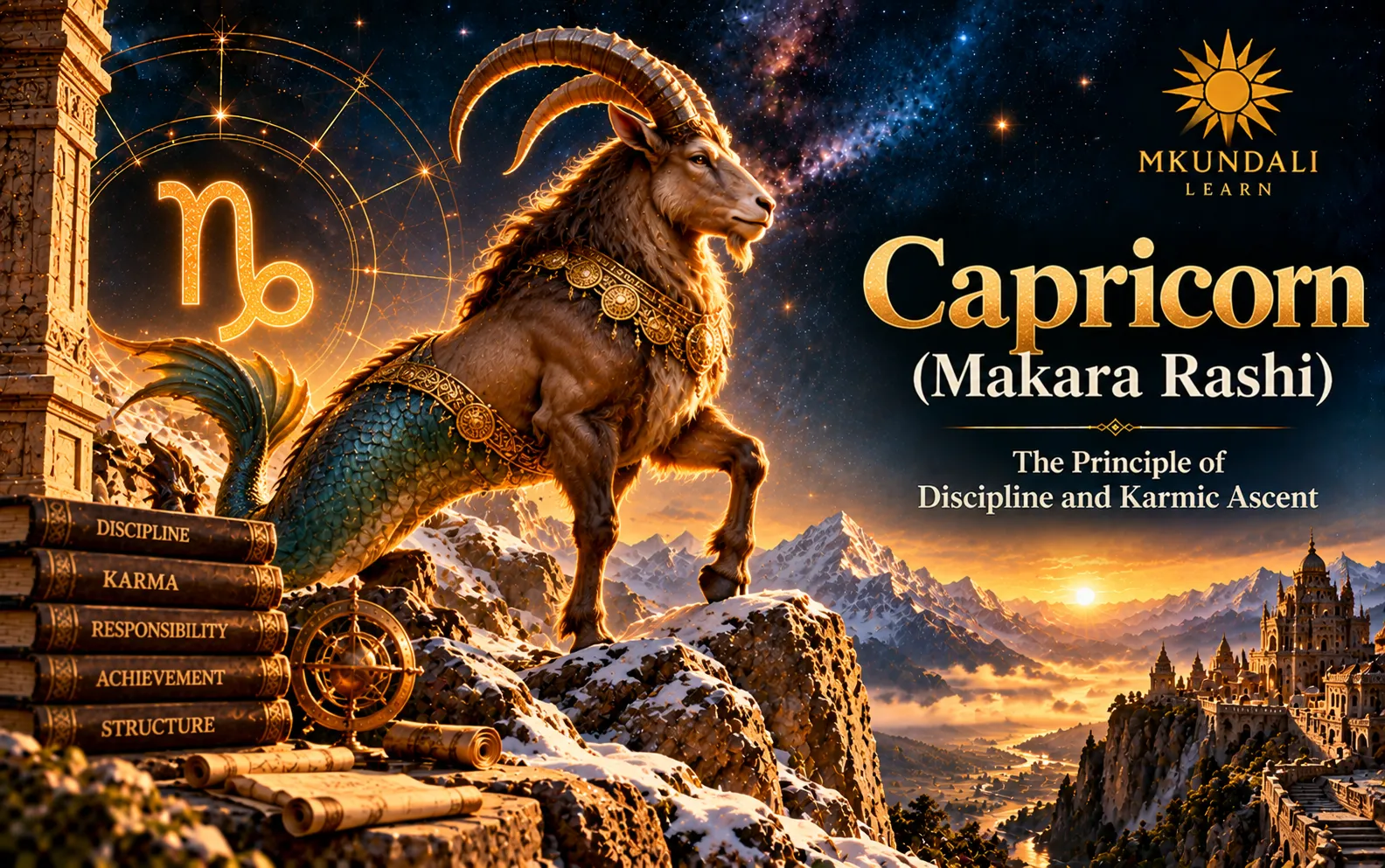
Capricorn (Makara Rashi): The Principle of Discipline and Karmic Ascent
Capricorn, known as Makara Rashi (मकर राशि) in Vedic astrology, is the tenth sign of the zodiac. It represents discipline, responsibility, perseverance, ambition, and the gradual attainment of long-term goals. Following the philosophical expansion of Sagittarius, Capricorn brings ideals into practical reality through structured effort, patience, and sustained commitment.
Ruled by Saturn (Shani), Capricorn symbolizes time, karma, endurance, structure, and the wisdom gained through experience. Its Earth element (Prithvi Tattva) emphasizes practicality and tangible results, while its movable modality (Chara) represents initiative and the capacity to begin new undertakings.
Capricorn is associated with the willingness to accept responsibility and work steadily toward lasting achievement. Its strengths include discipline, reliability, strategic planning, and resilience. Its challenges may include rigidity, pessimism, excessive work orientation, and difficulty expressing emotions.
Core Attributes of Makara Rashi
The traditional attributes of Capricorn provide a foundation for understanding its nature and significance in Vedic astrology.
- Sanskrit Name: Makara Rashi (मकर राशि)
- Zodiac Position: Tenth sign of the zodiac
- Element (Tattva): Earth (Prithvi) — practicality, stability, discipline, and material accomplishment
- Modality (Gati): Movable (Chara) — initiative, structured progress, and worldly advancement
- Direction (Disha): South
- Ruling Planet (Swami): Saturn (Shani) — discipline, time, perseverance, responsibility, and karma
- Body Parts (Kaya Bhaga): Knees, joints, and bones — traditionally associated with structural support and endurance
- Gender: Female — receptivity, restraint, and inward resilience
- Varna: Shudra — labour, service, practical work, and sustained effort
- Guna: Tamas — persistence, stability, and attachment to established structures
- Sign Nature (Prakriti): Cold and dry — restraint, practicality, and emotional reserve
- Animal Symbol: Makara, traditionally represented as a sea creature or crocodile-like being — endurance, strategic strength, and the ability to navigate difficult conditions
Together, these attributes establish Capricorn as a sign of discipline, responsibility, and sustained achievement.
Saturn: The Ruling Planet of Capricorn
Saturn governs Capricorn and contributes its associations with time, responsibility, discipline, limitations, perseverance, and the consequences of action. It emphasizes the importance of patience, practical judgment, and the gradual development of lasting results.
Under a constructive expression, Capricorn may indicate maturity, reliability, strategic thinking, administrative ability, and a willingness to work toward long-term objectives. Its Saturnian influence supports the creation of stable structures through consistent effort.
When expressed poorly, these qualities may become pessimism, excessive caution, rigidity, emotional distance, or an overwhelming focus on duties and obligations.
Capricorn's association with karma emphasizes accountability and the relationship between sustained effort and eventual outcomes. However, its presence alone does not guarantee success or hardship. The condition of Saturn and the other planetary influences in the birth chart help determine how Capricorn's qualities are expressed.
Nakshatras in Makara Rashi
Capricorn contains portions of three nakshatras: Uttara Ashadha, Shravana, and Dhanishta. Each contributes a distinct influence to the sign.
Uttara Ashadha Nakshatra (26°40′ Sagittarius–10° Capricorn)
Uttara Ashadha begins in Sagittarius and extends into Capricorn. It is associated with righteousness, responsibility, determination, and enduring achievement. In Capricorn, these qualities emphasize perseverance, ethical conduct, and the willingness to work patiently toward meaningful goals.
Shravana Nakshatra (10°–23°20′ Capricorn)
Shravana is associated with listening, learning, knowledge, and the preservation of tradition. Its influence strengthens Capricorn's connection with education through experience, careful observation, and the practical application of knowledge.
It also emphasizes the importance of understanding instructions, established systems, and the wisdom passed down through experience.
Dhanishta Nakshatra (23°20′ Capricorn–6°40′ Aquarius)
Dhanishta begins in Capricorn and extends into Aquarius. It is associated with rhythm, prosperity, discipline, achievement, and social recognition. In Capricorn, it can emphasize organizational ability, ambition, and the desire to achieve tangible results through sustained effort.
Together, these nakshatras describe a progression from principled perseverance through learning and experience to achievement and recognition.
Personality and Psychological Characteristics
Capricorn is traditionally associated with a disciplined, practical, and responsibility-oriented temperament. It tends to evaluate situations realistically and prefers dependable progress over uncertain promises.
Share this article
0 likes · 0 comments
Comments
No comments yet.
Leave a comment
Comments are checked by an admin before they appear. Your email is never shown.