
Explore Dhanu Rashi (Sagittarius) in Vedic astrology, including its ruling planet Jupiter, fire element, nakshatras, personality traits, wisdom, spirituality, strengths, challenges, and career associations.
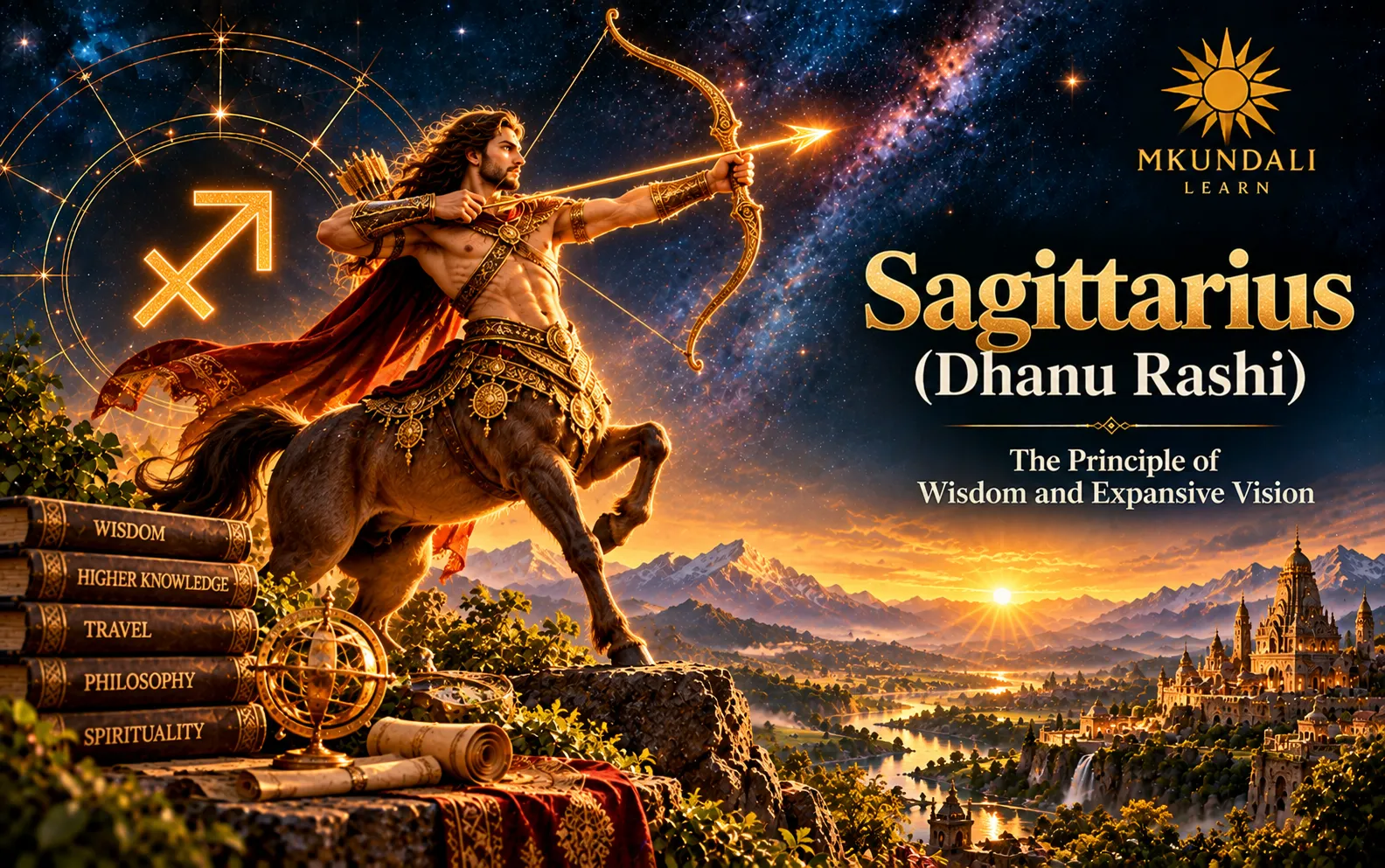
Sagittarius (Dhanu Rashi): The Principle of Wisdom and Expansive Vision
Sagittarius, known as Dhanu Rashi (धनु राशि) in Vedic astrology, is the ninth sign of the zodiac. It represents wisdom, higher knowledge, philosophy, optimism, ethics, and the pursuit of truth. Following the intense transformation of Scorpio, Sagittarius turns toward understanding life's deeper meaning and aligning individual actions with broader principles.
Ruled by Jupiter (Guru), Sagittarius symbolizes learning, expansion, righteousness, guidance, and spiritual understanding. Its Fire element (Agni Tattva) emphasizes enthusiasm, courage, and vision, while its dual modality (Dvisvabhava) combines adaptability with the desire to pursue meaningful objectives.
Sagittarius represents the aspiration to move beyond immediate concerns and seek a broader understanding of life. Its strengths include optimism, intellectual curiosity, and ethical leadership. Its challenges may include dogmatism, excessive idealism, and a tendency to assume that personal beliefs represent universal truths.
Core Attributes of Dhanu Rashi
The traditional attributes of Sagittarius provide a foundation for understanding its nature and significance in Vedic astrology.
- Sanskrit Name: Dhanu Rashi (धनु राशि)
- Zodiac Position: Ninth sign of the zodiac
- Element (Tattva): Fire (Agni) — enthusiasm, courage, inspiration, and vision
- Modality (Gati): Dual (Dvisvabhava) — adaptability, versatility, and the integration of thought with action
- Direction (Disha): East
- Ruling Planet (Swami): Jupiter (Guru) — wisdom, higher learning, expansion, and righteousness
- Body Parts (Kaya Bhaga): Hips and thighs — traditionally associated with movement and forward progress
- Gender: Male — outward expression, initiative, and active engagement
- Varna: Brahmin — knowledge, teaching, philosophy, and spiritual guidance
- Guna: Sattva — clarity, ethical conduct, and spiritual inclination
- Sign Nature (Prakriti): Hot and dry — enthusiasm, intensity, and an idealistic orientation
- Symbol: Archer or centaur — aspiration, direction, and the pursuit of higher understanding
Together, these attributes establish Sagittarius as a sign of wisdom, expansion, and dharmic guidance.
Jupiter: The Ruling Planet of Sagittarius
Jupiter governs Sagittarius and contributes its associations with wisdom, higher education, philosophy, ethics, guidance, and expansion. It represents the search for meaning and the ability to develop a broader perspective through knowledge and experience.
Under a constructive expression, Sagittarius may indicate intellectual curiosity, optimism, generosity, principled conduct, and the ability to teach or guide others. Its Jupiterian influence encourages learning and the application of knowledge to larger questions of life.
When expressed poorly, these qualities may become overconfidence, moral superiority, dogmatism, or unrealistic expectations. The condition of Jupiter in the birth chart helps determine how Sagittarius's qualities are expressed.
Nakshatras in Dhanu Rashi
Sagittarius contains portions of three nakshatras: Mula, Purva Ashadha, and Uttara Ashadha. Each contributes a distinct influence to the sign.
Mula Nakshatra (0°–13°20′ Sagittarius)
Mula is associated with roots, investigation, the removal of superficial assumptions, and the search for fundamental causes. Its influence can encourage deep inquiry and a willingness to question established beliefs. In Sagittarius, these qualities support philosophical investigation and the search for truth beyond appearances.
Purva Ashadha Nakshatra (13°20′–26°40′ Sagittarius)
Purva Ashadha is associated with confidence, determination, conviction, and the pursuit of victory. Its influence strengthens Sagittarius's optimism and commitment to ideals. When expressed constructively, it supports perseverance and self-belief; when excessive, it may become stubbornness or an unwillingness to reconsider one's position.
Uttara Ashadha Nakshatra (26°40′ Sagittarius–10° Capricorn)
Uttara Ashadha begins in Sagittarius and extends into Capricorn. It is associated with responsibility, righteousness, leadership, and enduring achievement. In Sagittarius, it connects ambition with ethical conduct and the pursuit of lasting results.
Together, these nakshatras describe a progression from investigating fundamental truths through determined conviction to responsible action and enduring achievement.
Personality and Psychological Characteristics
Sagittarius is traditionally associated with an optimistic, independent, and meaning-oriented temperament. It seeks knowledge, values freedom of thought, and often approaches life through principles, beliefs, and long-term aspirations.
Share this article
0 likes · 0 comments
Comments
No comments yet.
Leave a comment
Comments are checked by an admin before they appear. Your email is never shown.